
nbn® Plans
Internode’s customers get our outstanding customer service while enjoying the great performance that our nbn® plans deliver.

All Internode NBN plans come with
$0 activation fee on all NBN™ plans^
^NBN new development fee may apply
Phone line service
Available if Internode-supplied modem is used
Dual-Stack IPv6 and IPv4
Networking that's ready for the future.
Find out more
Expert Support
Award winning support available 7 days a week
Here’s some key information about getting Internode NBN.
The National Broadband Network (NBN) refers to the fixed line, fixed wireless and satellite infrastructure being rolled out by NBN Co to replace the existing broadband infrastructure with a faster and more reliable broadband service.
Getting connected to the NBN
As the NBN uses a mix of technologies, the connection process depends which technology is available at your address. To find out what will be rolled out in your area, check our NBN Coverage page.
Once you know what will be available in your area, read on to learn more about getting connected. If you have any questions, contact our NBN team on 13 66 33.
The different flavours of the NBN
NBN FTTP
Fibre optic cable will lead all the way to your premises, terminating at your NBN Utility Box on an outside wall.

NBN FTTB
Fibre optic cable connects to the building’s Main Distribution Frame (MDF), typically in the basement. From there, the MDF will connect to the wall socket in your unit via the building’s internal copper cabling.

NBN FTTN
Fibre optic cable connects to a node (a cabinet in your street or a street nearby). Copper cabling connects from the node to a wall socket in your premises (for some premises the copper passes through a Main Distribution Frame).

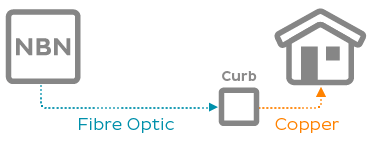
NBN FTTC
Fibre optic cables connect to a small node close to your premises and existing copper cables deliver broadband to an NBN FTTC Connection Device in your premises.
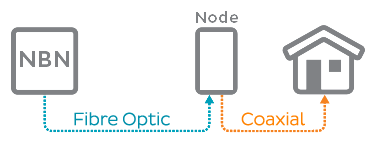
NBN HFC
Coaxial cables deliver broadband to an NBN HFC Connection Device in your premises.
How do I get connected to the NBN?
Internode provides services in all NBN areas (except Satellite). To see if we can connect you, check your address to see if the NBN is available at your premises.
If the NBN is coming soon, you can register your interest online and we'll contact you when it's time to place an order.
All you'll need to do is pick out an NBN plan and sign up online, or give one of our friendly NBN experts a call on 13 66 33. If it turns out you need a technician to visit and install some NBN equipment, don't worry - we'll help organise this for you.
Can I keep my existing telephone number to use on the NBN?
In most cases, we can bring your existing telephone number over to the NBN network. Just call our friendly Sales Team on 13 66 33 to discuss the matter further.
Alternatively, you can specify that you'd like to keep your telephone number when you sign up online. We'll keep you updated on the progress of your number transfer.
I have existing broadband/phone services. How can I upgrade to NBN?
Typically your address can be upgraded to NBN broadband with little to no downtime. More often than not, you can continue to use your existing services until your new NBN equipment has been installed and your service has been activated. In the meantime, you should check to make sure that your current modem will be compatible with your new NBN broadband service.
Upgrading is simple, just sign up online or call our expert Sales Team on 13 66 33 to get started.
Remember: Moving to NBN broadband will not necessarily cancel your existing broadband and phone services. Once you've upgraded, please contact your existing provider to ensure your old services are cancelled, otherwise you may continue to be billed for them.
I'm renting, what do I have to do to get connected to NBN?
Prior to any installation work taking place at the premises, you'll need to secure permission from your property manager or landlord. If they have any questions, just point them to this FAQ.
I already have NBN. How do I switch my NBN provider to Internode?
If you already have an active NBN service connected at your address and you've applied to switch to an Internode NBN plan, please call us on 13 66 33, to arrange a Service Transfer. Once lodged, Service Transfers typically take less than 2 business days to complete, and downtime is typically less than 24 hours.
If you do not own the active NBN service connected at your address (i.e. you've just moved in and the previous tenant has left their services connected) then please see our Connect Outstanding FAQ instead.
How long does it take to get connected to NBN?
Typically, NBN connections are completed within 2-20 business days - this varies depending on whether or not you've already had your NBN equipment installed as well as NBN technician availability.
Activations may occur sooner if NBN has previously been connected at your address.
What happens when NBN is installed?
If an NBN technician is required to visit your premises to install any required equipment or complete your NBN connection, we'll be in touch to book a suitable appointment with you. An installation is typically not required if NBN has been previously connected at your address.
The type of equipment you'll receive depends on the type of NBN being connected.
|
Just right for the basics, like web browsing and email access.
|
|
For light online entertainment needs, this plan provides some extra speed.
|
|
Recommended for high quality streaming or homes with more users or devices on the network.
|
|
For ultra-connected households, digital creators, and remote workers.
|
|
Recommended for large households and connoisseurs who want the smoothest 4K streaming.
|
|
Our best available NBN™ connection for heavy duty users and small businesses.
|


Factors that may affect your NBN connection speed
| NBN Infrastructure
For example, the length and quality of copper cabling used in NBN FTTN/FTTC/FTTB has a significant impact on performance. |
|
| Coexistence period
NBN FTTN/FTTB /FTTC services are typically limited during the period they must share the same copper line as legacy non-NBN services. |
|
| Quality and capability of hardware
This can include modems, WiFi routers and Ethernet or phone cables. |
|
| WiFi signal interference
You can learn how to improve your home or office’s WiFi signal here. |
|
| Number of connected devices
When too many devices share the same bandwidth, data flow is limited |
|
| Network Congestion
For example, when speeds slow during peak traffic in the evenings. |
|
| Which content is being accessed
There may be insufficient server capacity or other issues affecting a specific website or online game. |
* NBN Speeds: FTTB/C/N speeds to be confirmed when active. Typical Evening Speeds are subject to change and are measured 7pm-11pm. Speeds are not guaranteed and may vary. The maximum possible speed that is available outside the busy period of 7pm-11pm is: 12Mbps (NBN25), 50Mbps (NBN50), 500Mbps (NBN500), 750Mbps (Superfast), 1000Mbps (Ultrafast). As NBN500 and Superfast are new plans, the speed stated here is currently based on an estimate. Internode will revise the typical evening download speed once it has collected enough data on the speed performance for these plans. Learn more about NBN speeds.
To ensure you're using Internode NBN Broadband services to their full potential, you need to use the most effective hardware to connect to the Internet.
Hardware Requirements
You will need an Ethernet/VDSL2 capable modem/router with 802.1q VLAN capability, or the optional modem/router supplied by us, to use your NBN broadband service. You will require the modem/router supplied by us and a standard phone handset (approved for use in Australia) to use the included NBN Phone service.
Will my current modem/router work with NBN broadband?
- To use your NBN™ service your modem must be NBN-ready and allow you to change the VLAN setting.
- Additionally;
- For NBN™ FTTN or FTTB your modem will also need to be VDSL2 , Save Our Showtime (SOS) and Robust Overhead Channel compatible.
- For Superfast/Ultrafast plans you will need to supply a compatible high-speed modem to support your ultra-fast speeds.
You can check compatibility with your modem manufacturer.
Learn more;
If you’re unsure and need to purchase a modem/router, ours are typically included or discounted if you choose the 24-month contract option.
Do I need equipment installed by NBN?
If necessary, an NBN technician will complete a standard installation of the required NBN equipment at no cost to you. Please note that fees may be incurred for non-standard installations as determined by NBN Co. The technician will be able to advise these fees if this is the case.
Check out Transferring to the NBN for more details about the different types of equipment used with the different types of NBN services.
Customer Premises Cabling
We will deliver your service to the Network Boundary Point:
- On Fibre to the Premises (FTTP) services, the Network Boundary Point is the UNI-D ports on the NBN Network Termination Device (NTD).
- On Fibre to the Node (FTTN) services, the Network Boundary Point is generally the first telephone socket in your premises. If your premises is a unit or other strata premises, the Network Boundary Point may be a Main Distribution Frame (MDF).
- On Fibre to the Building (FTTB) services, the Network Boundary Point is the Main Distribution Frame (MDF), usually in your building's basement or telecommunications room.
- On Hybrid Fibre-Coaxial (HFC) and Fibre to the Curb (FTTC) services, the Network Boundary Point is the UNI port on the NBN Network Termination Device (NTD).
Cabling beyond the Network Boundary Point is your responsibility. You may incur charges for any installation, repair, or any other work required in relation to any such cabling.
Will my medical alarm, security alarm, EFTPOS machine or fax machine work on the NBN network?
Many types of devices that are normally connected to phone lines (such as medical alarms, back to base alarms, EFTPOS machines, fax machines and more) can work over the NBN network, however please contact the service provider or device manufacturer to make sure - you may need to order a specific type of phone service on the NBN network in order for these services to continue working.
Please note:
- Internode does not offer a Priority Assistance service. If you have Priority Assistance or believe you may be eligible, please consider this before lodging your application. Telstra is a provider who can offer Priority Assistance.
- We recommend you register any medical alarm services on the NBN Medical Alarm Register, which can be found on the NBN Co website.
Most residential customers find that our NBN plans provide all the features they need for home broadband, including:
Fixed Monthly Charge - No excess usage charges
Usage beyond your monthly quota is shaped to 256/256 kbps.
Anytime Quota
Use the Internet whenever you like - there's no 'peak' and 'off-peak' hours.
Email Accounts
Up to 20 email accounts with spam and virus filtering.
Technical Support
Our Support Team is available 7 days a week.
Dynamic IPv4 Address and /56 IPv6 Prefix
These are dynamic IP services, suitable for home broadband access. A static IP address is available with the Static IP Pack.
Security Protection
Our Port Blocking helps protect your home network and prevent spam and viruses.
Quota on Demand
Need a data top-up? Simply add a Data Pack online.
What is the New Development Fee?
Effective 1 April 2016, the $300 New Development Fee (NDF) is charged for all NBN broadband connections in the following circumstances:
- The first connection at a premises in a newly developed area i.e. a suburb with no pre-existing telecommunications infrastructure.
- The first connection(s) at a premises in an establish area in the rare instance that a developer has increased the number of dwellings on the same plot of land e.g. demolished a single house and built a block of units.
Once the NDF has been charged at an address, it will not be charged again for subsequent connections, provided the number of dwellings at that address has not increased.
At Internode, we pass on the full $300 NDF charge as billed by our wholesaler, NBN Co, to new customers. These charges are clearly visible when applying for a service – they are also included in any Critical Information Summary for NBN broadband plans sold after 1 April 2016.
Can I change my NBN plan after I've signed up?
Your broadband requirements may change over time, so you're not locked in to a particular broadband speed or monthly quota.
- You can request plan changes at any time via our online plan change tool, whether you are within a contract term or not. Your plan change will take effect at the start of your next billing period.
- Remember you can use Data Packs if you need an instant quota upgrade.
- See our Typical Usage guide for help estimating your monthly Internet usage requirements.
Other Fees
NBN Subsequent Install Fee: $297
Where you have an existing copper phone service at your premises but elect to have your NBN service installed on a separate copper pair instead of converting an existing service, we may charge you a fee of $297 for installation. You may be charged additionally for any extra materials or labour required to complete the installation.
Incorrect Callout Fee: $297
Where we attend your premises to repair a fault reported by you, but we determine that there is no fault or the fault is caused by your equipment, we may charge you a fee of $297 for attendance. You may be charged additionally for any extra materials used to repair Your equipment or labour beyond 2 hours.
Other NBN fees and charges
We may be charged for the below activities. Where we incur these charges, we may bill those charges to you. However, we will notify you of these charges before doing the work or when you make your appointment. We will only proceed with the activity if you agree to pay these charges.
- non-standard installations (as determined by NBN Co);
- subsequent installations;
- additional installations;
- changes to installations;
- cancelled appointments
- missed appointments (where you are not in attendance at the Premises at the agreed appointment time);
- repair, modification or removal of equipment;
- invalid faults (where you report a fault with your Service, and the issue is not with NBN Equipment);
- central splitter installations (where requested by you or required to resolve performance issues with your Service); and
- restored orders (where you ask for an order that has been put on hold to be reinstated).
Other Limitations
We have highlighted below some of the important limitations of the Internode NBN Broadband service:
No resale of bandwidth
Internode Broadband services provide access for personal and immediate family or business use only.
Single location only
Internode Broadband services are designed to allow one concurrent router login on one specific physical connection (you can of course have multiple users sharing this connection). Logging in at a different physical location to the location associated with the connection may fail to work.
Dynamic IP address
A dynamic IP address is supplied by default. If yodu need a static IP address, you may add this for an additional cost. IPv6 addressing is also available if supported by your equipment.
Uploads & Downloads
The monthly quota allocation on Internode NBN Broadband services is counted as the sum of both uploads and downloads.
Definitions (in accordance with Australian ISP conventions):
- 1 MB or 1 Mbyte is 1 Megabyte = 1,000,000 bytes.
- 1 GB or 1 Gbyte is 1 Gigabyte = 1,000 Megabytes
- 1 TB or 1 Tbyte is 1 Terabyte = 1,000 Gigabytes.
Invoices and usage warnings are sent to your Internode email address. When your service is activated, you'll receive an email notification with the details of your Internode email address.
As per the Internode Customer Relationship Agreement, payment for all recurring charges is required monthly in advance.
Your first invoice will include your up-front setup fees, hardware purchase and delivery, and the equivalent of one month’s subscription fee. This invoice will be debited from your nominated credit card or bank account immediately upon submitting your application unless you are pre-ordering a service. If you are pre-ordering a service, your first invoice will be debited when that service is available at your address and we can submit your order. Each monthly billing period, when your monthly usage and spend limits reset, will begin on your anniversary date
- Your anniversary date will be set on the day your service is activated. If your anniversary date initially falls on the 29th, 30th or 31st of the month, it will be moved to the 1st of the month.
- Subsequent invoices will be issued 8 days after your anniversary date and will be due 14 days after they are issued.
If you run into connection issues over your fixed line, you can configure the iiNet Wi-Fi Max modem to connect to a mobile hotspot network from your mobile phone and automatically use your mobile data. To find out how to configure your modem, head to our support hub and we’ll help you get set up.
Keep in mind: the mobile backup feature will use your mobile data at your own cost.
To improve and enhance our services while continuing to deliver the great-value connectivity our customers need, we are no longer signing up new customers to Internode.
New residential customers can sign up to plans at iiNet from 6 December 2023.
This will not disrupt existing customers’ current services at this time and no action is required to continue as a valued Internode customer. Existing customers can still change plans, add new services, update account details, move house, and upgrade to a new broadband technology. Learn more about this change.
All Internode services are bound by our Customer Relationship Agreement. This page offers a quick summary of the terms, fees and guarantees that come with your service. If you have any questions, please feel free to contact us on 13 66 33.
When you sign up for a service you agree to the Internode Customer Relationship Agreement and Internode NBN Fibre Service Description. These are Internode's standard terms and conditions for all Internode NBN Broadband services.
If your NBN service is supplied with an NBN Phone service, you also agree to the Internode NBN Phone Service Description.
Connecting to the NBN
- Please do not disconnect your existing services until your NBN service is working.
- Once the NBN roll out has been completed in your area, services over the legacy copper & HFC (Cable) network will no longer be available at your premises. Any copper & HFC (Cable) services that are still connected at your premises on the Disconnection Date are liable to be disconnected.
- The installation of NBN FTTN, FTTC or FTTB will disconnect the current copper-line telecommunications service that is connected to your premises if you have elected to transition your existing copper-line
- For FTTN & FTTB this will occur outside of your premises during your installation.
- For FTTC this will occur when your NBN service is activated, which typically occurs when your NBN Connection Box is connected (and working) by either you or an NBN Installer.
- Existing ancillary services and devices that rely on your copper-line telecommunications service will no longer work unless you move them to the NBN (such as medical alarms, back-to-base alarms, personal response systems, fax machines and EFTPOS). Please check with your device/service manufacturer or provider to see if the device is NBN compatible.
- We recommend you register any medical alarm services on the NBN Medical Alarm Register, which can be found on the NBN Co website.
- We are responsible for your service up to the Network Boundary Point:
- For FTTN, FTTC or FTTB this may the first telephone wall socket in your premises or, in the case of multi-dwelling units, your side of the Main Distribution Frame.
- For FTTP or HFC this is a Network Termination Device supplied by NBN Co.
- Customer equipment (such as new or existing cabling and telecommunications outlets) beyond the network boundary point may not work when you connect to NBN. You may require a registered cabler to connect these to your NBN service. You will be responsible for the cost of any such cabling work.
- Your NBN service does not include a battery backup. This means your household will be unable to access any internet and telephony services provided by NBN during a power outage. This includes making calls to emergency service numbers like 000. Please ensure you have alternate ways of making calls, such as mobile phone.
- If you transfer your existing NBN service, you understand that you are responsible to your current broadband provider for any charges incurred until this transfer is complete.
- The activation of your selected services does not necessarily cancel any existing phone or broadband services. It is your responsibility to contact your existing service providers to ensure that unwanted services are cancelled, otherwise you may continue to be billed for them.
Telephony Services
- NBN Phone is a phone service that is offered with your NBN plan. To use it, you will require a standard phone handset (approved for use in Australia) and the Supplied Broadband Equipment.
- Calls to 000 emergency services may not be possible in the event of a power outage.
- We do not offer priority assistance, nor support for medi-alert services and monitored alarm systems. Priority assistance is offered by Telstra for people who may be reliant on a telephone service because of a serious medical condition. If you have a medi-alert or priority assistance service or believe that you are eligible, please consider this before proceeding with your order.
- Calls to 19/1900 numbers are not available.
- This service is provided on the basis that you waive your Customer Service Guarantee (CSG) in relation to the NBN Phone. You do not have to agree to the waiver, but if you do not agree, we have the right to decline to supply the service.
- For calls on NBN Phone:
- Timed international calls are charged per second.
- Calls to Australian mobile numbers are charged per 30 second block.
- Included calls are subject to our Acceptable Use Policy.
- NBN Phone must be paired with an active Internode NBN broadband service. If your NBN broadband plan is cancelled, your NBN Phone service will also be cancelled.
- Transferring an existing phone number to NBN Phone will disconnect the existing phone service. After a successful transfer, please contact your existing provider to ensure that your phone service and any add-on services are cancelled.
- Our NBN Phone services will not work on third party modems. In these instances we will not provide you an NBN Phone service if you have not purchased an Internode modem with your NBN service.
Hardware
- Some NBN applications require you to purchase an iiNet modem (which is WiFi and VoIP enabled).
- There are multiple types of broadband and phone on the NBN™, with different hardware setups and requirements. Learn more. about modem compatibility requirements.
- NBN™ FTTC connections require an NBN™ Connection Device, which:
- May be shipped to you for self-installation (if your premises is eligible)
- Will reverse-power the NBN™ network to provide you with a working service
- Remains the property of NBN Co and should not be removed from the premises
- If you BYO modem;
- Your modem must allow you to change the VLAN setting, and for NBN FTTN or FTTB must be VDSL2 compatible. See BYO modem settings.
- For Superfast/Ultrafast plans you will need to supply a compatible high-speed modem to support your ultra-fast speeds.
Fair contract guarantee
Our NBN™ plans are provided on no lock-in contract. When you sign up to a contract you commit to retain your NBN™ service for the set period.
Our fair contract guarantee lets you change between plans at any time without the need to break your agreed contract.
There are some unique terms and conditions associated with NBN Fibre to the Premises (FTTP) services.
- You must obtain the consent of the property owner to have the NBN FTTP installation performed. If you are not the property owner, you will need to obtain the property owner's written consent (dated and signed), and be able to provide that to Internode upon request.
- FTTP NBN services are available to single dwelling units (SDUs) and multiple dwelling units (MDUs) in areas covered by the NBN FTTP rollout. Please note that MDU addresses may take longer to become available due to additional cabling requirements.
- The FTTP installation will be performed during business hours, and you will need to be home to provide access for the installation technicians.
- The cabling that is required in your premises beyond the optical NBNCO Network Termination Device (NTD) is your cost and responsibility, as is the provision of a suitable 240V AC power outlet.
There are some unique terms and conditions associated with NBN Fibre to the Building (FTTB) and Fibre to the Node (FTTN) services.
- Your existing phone and ADSL service will be cancelled automatically when the copper line is converted to an NBN FTTB or FTTN service. If you wish to keep your existing services active - while also installing a separate FTTN/FTTB service - you will need a 'subsequent installation'. A $297 fee applies to set up this separate FTTN/FTTB service.
- If you would like to keep your phone number, you will need to transfer it (port) to a supported VoIP service like Internode NBN Phone. If you do not port your number when you order your NBN service you will lose the number.
- NBN FTTN and FTTB services do not support any 'traditional' analog / voice services. This includes analog telephones and any service that requires an analog modem connection, such as monitored alarms, EFTPOS, faxes, dialup modems, pay TV, etc. In particular, please check with your security service provider if your premises has a monitored alarm system.
- NBN FTTB and FTTN are delivered over VDSL2 from NBN infrastructure to your premises. As such, the length and quality of the copper line from your premises to the NBN infrastructure may affect the speed and performance of your NBN broadband service.
There are some unique terms and conditions associated with NBN Hybrid Fibre-Coaxial (HFC) services.
- You must obtain the consent of the property owner to have the NBN HFC installation performed. If you are not the property owner, you will need to obtain the property owner's written consent (dated and signed), and be able to provide that to Internode upon request.
- NBN HFC services are available to single dwelling units (SDUs) and multiple dwelling units (MDUs) in areas covered by the NBN HFC rollout. Please note that MDU addresses may take longer to become available due to additional cabling requirements.
- The HFC installation will be performed during business hours, and you will need to be home to provide access for the installation technicians.
- The cabling that is required in your premises beyond the Network Termination Device is your cost and responsibility, as is the provision of a suitable 240V AC power outlet.
There are some unique terms and conditions associated with NBN Fibre to the Curb (FTTC) services.
- In most cases your existing phone and ADSL service will be cancelled automatically when the copper line is converted to an NBN FTTC service. If you wish to keep your existing services active - while also installing a separate FTTC service - you will need a 'subsequent installation'. A $297 fee applies to set up this separate FTTC service.
- If you would like to keep your phone number, you will need to transfer it (port) to a supported VoIP service like Internode NBN Phone. If you do not port your number when you order your NBN service you will lose the number.
- NBN FTTC services do not support any 'traditional' analog / voice services. This includes analog telephones and any service that requires an analog modem connection, such as monitored alarms, EFTPOS, faxes, dialup modems, pay TV, etc. In particular, please check with your security service provider if your premises has a monitored alarm system.
- NBN FTTC is delivered over VDSL2 from NBN infrastructure to the NBNCo Network Connection Device in your premises. As such, the length and quality of the copper line from your premises to the NBN infrastructure may affect the speed and performance of your NBN broadband service, read more about NBN performance.
| Setup Fees | |||
|---|---|---|---|
| New and existing customers on a no lock-in contract | |||
| Standard activation This is our once-off activation fee to get you connected.* |
$0 | ||
|
Wi-Fi modem |
$0 when you stay connected for 24 months. $0 if you cancel or withdraw within 24 months and return the modem to us in Good Working Order within 21 days. $200 if you cancel prior to 24 months and prefer to keep the modem |
||
| nbn® Wi-Fi modem Delivery This is our delivery fee to provide you with your nbn® Wi-Fi modem (if purchased). |
$15 | ||
| Non-Standard setup Fees may be incurred for non-standard or additional nbn® installations. |
As defined by nbn® (or Internode where applicable) | ||
| New Development Charge As of 1st April 2016, nbn co ltd introduced a connection charge of $300 for each new connection order within a New Development Location. If you are connecting within a development area you may be liable for this charge. More information on these charges can be found here. |
$300 | ||
*Any cabling that is required in your premises beyond the Network Boundary Point is your responsibility. This does not include the purchase of a modem. There may be additional installation fees for non-standard premises, however your agreement to these fees will be confirmed prior to Internode setup.
Our NBN Phone service is included with new NBN Residential Fibre plans. It works just like a normal phone, using your internet connection to make and receive calls. Simply connect your phone handset into the Phone port on the supplied broadband modem.
Please note: our NBN Phone service will not work using a third-party modem. If you choose not to purchase an Internode modem, we will not provide you with an NBN Phone service when you sign up.
NBN Phone Features
|
|
BYO Phone Number
Bring your existing phone number to NBN Phone and avoid the hassle of changing your home phone number.
Or if you'd prefer not to transfer an existing number, you'll receive a new local number for your NBN Phone service.
| Destination | Flagfall | Rate per Minute |
|---|---|---|
| Local Calls (02, 03, 07, or 08 in your local call area) |
$0.18 | untimed |
| Standard National Calls (02, 03, 07, or 08) |
$0.18 | untimed |
| Calls to Australian Mobiles (04) |
no flagfall | $0.29 per minute |
| Calls to Australian Special Numbers (13 and 1300) |
$0.275 | untimed |
| Calls to International and Satellite Services (Fixed-line or mobile numbers outside of Australia) |
$0.15 | view rates |
|
Timed charges for calls to Australian Mobiles and International calls are assessed on a per second basis, with a minimum assessed duration of one minute per call. Call charges may change over time. We recommend you check this page from time to time to confirm the current call prices. |
||
Special Services
| Destination and Prefix | Flagfall | Rate per Minute |
|---|---|---|
|
Can't find the destination you're looking for above, or aren't sure which rate applies to the number you are calling? Simply enter the phone number you wish to call, exactly (including full area code) as you'd dial it, into the call cost calculator. |
||
| Universal International Freephone (0011 800) |
no flagfall | untimed |
| National Toll Free (1800) |
no flagfall | untimed |
| National Local Rate (13 and 1300) |
$0.275 | untimed |
| National Directory Assistance (1223) |
$0.55 | untimed |
| Operator Services (other carriers) where available (125) |
$0.25 | untimed |
| Dial Before You Dig (1100) |
$0.25 | untimed |
| Time (1194) |
no flagfall | untimed |
| Weather (1196) |
$0.25 | untimed |
| Number Identification (12722123) |
no flagfall | untimed |
| Telstra One Number (0500) |
no flagfall | $0.75 per minute |
Call Forwarding
For detailed explanations of the Call Forwarding features, please see the Feature Access Codes and Test Numbers page.
You will be charged the applicable call rate for the call forwarded from your NBN Phone service, as per the following table:
| Type | Flagfall | Rate per Minute |
|---|---|---|
| Calls Forwarded to Australian Mobiles (04) |
no flagfall | $0.29 per minute |
| Calls Forwarded to Australian Fixed Lines (02, 03, 07, and 08) |
$0.18 | untimed |
| Calls Forwarded to International and Satellite Services |
$0.15 | view rates |
Calls not handled by NBN Phone
NBN Phone does not support calls to premium rate services, these include:
|
|
Your international call rates and destinations will depend on which billing system you are on. To check which billing system applies to you, check out this page. If you are on our new billing system, please see below. If you are on our old billing system, please check out the international call rates and destinations here.
To make an International call, dial 0011 followed by the country code, followed by the phone number in the country.
- Calls rates are per minute, and are charged to the second, with a minimum assessed duration of one minute.
- These rates are subject to Internode's Customer Relationship Agreement and are subject to change over time.
Top 23 Popular International Destinations
Add a Premium Call Pack for $15 per month to get unlimited international calls to any landline or mobile (excluding satellite phones) to these destinations.
| Destination |
|---|
| Canada |
| China |
| France |
| Germany |
| Greece |
| Hong Kong |
| India |
| Indonesia |
| Ireland |
| Italy |
| Japan |
| Korea, Republic of |
| Malaysia |
| Netherlands |
| New Zealand |
| Singapore |
| South Africa |
| Sweden |
| Switzerland |
| Taiwan |
| Thailand |
| United Kingdom |
| United States |
Full List - All International Destinations
Add a Value Call Pack for $10 per month to get 100 minutes each month to call any landline or mobile (excluding satellite phones) to these destinations.
The below call rates apply to calls outside your plan’s inclusions or purchased call pack. When mobile rates aren’t listed, landline rates apply. Please note international premium rate numbers may be charged at a different call rate.
| Destination | Rate per Minute |
|---|---|
| Afghanistan |
$ 0.69
|
| Afghanistan Mobile |
$ 0.80
|
| Albania |
$ 0.29
|
| Albania Mobile |
$ 0.58
|
| Algeria |
$ 0.29
|
| Algeria Mobile |
$ 0.29
|
| American Samoa |
$ 0.69
|
| American Samoa Mobile |
$ 0.75
|
| Andorra |
$ 0.20
|
| Andorra Mobile |
$ 0.39
|
| Angola |
$ 0.39
|
| Angola Mobile |
$ 0.39
|
| Anguilla |
$ 0.39
|
| Antarctica |
$ 1.49
|
| Antigua and Barbuda |
$ 0.39
|
| Argentina |
$ 0.07
|
| Argentina City |
$ 0.07
|
| Argentina Mobile |
$ 0.29
|
| Armenia |
$ 0.29
|
| Armenia Mobile |
$ 0.49
|
| Aruba |
$ 0.29
|
| Aruba Mobile |
$ 0.29
|
| Ascension |
$ 0.79
|
| Austria |
$ 0.07
|
| Austria City |
$ 0.07
|
| Austria Mobile |
$ 0.49
|
| Azerbaijan |
$ 0.39
|
| Azerbaijan Mobile |
$ 0.49
|
| Bahamas |
$ 0.19
|
| Bahrain |
$ 0.39
|
| Bahrain Mobile |
$ 0.49
|
| Bangladesh |
$ 0.29
|
| Bangladesh City |
$ 0.29
|
| Bangladesh Mobile |
$ 0.39
|
| Barbados |
$ 0.39
|
| Barbados Mobile |
$ 0.39
|
| Belarus |
$ 0.49
|
| Belarus Mobile |
$ 0.49
|
| Belgium |
$ 0.07
|
| Belgium City |
$ 0.07
|
| Belgium Mobile |
$ 0.49
|
| Belize |
$ 0.39
|
| Belize Mobile |
$ 0.59
|
| Benin |
$ 0.29
|
| Benin Mobile |
$ 0.29
|
| Bermuda |
$ 0.19
|
| Bhutan |
$ 0.39
|
| Bolivia |
$ 0.29
|
| Bolivia City |
$ 0.29
|
| Bolivia Mobile |
$ 0.29
|
| Bosnia and Herzegovina |
$ 0.39
|
| Bosnia and Herzegovina Mobile |
$ 0.49
|
| Botswana |
$ 0.29
|
| Botswana Mobile |
$ 0.47
|
| Brazil |
$ 0.14
|
| Brazil City |
$ 0.14
|
| Brazil Mobile |
$ 0.39
|
| Brunei Darussalam |
$ 0.14
|
| Brunei Darussalam Mobile |
$ 0.14
|
| Bulgaria |
$ 0.14
|
| Bulgaria City |
$ 0.14
|
| Bulgaria Mobile |
$ 0.48
|
| Burkina Faso |
$ 0.39
|
| Burkina Faso Mobile |
$ 0.39
|
| Burundi |
$ 0.29
|
| Burundi Mobile |
$ 0.39
|
| Cambodia |
$ 0.49
|
| Cambodia City |
$ 0.49
|
| Cambodia Mobile |
$ 0.49
|
| Cameroon |
$ 0.49
|
| Cameroon Mobile |
$ 0.56
|
| Canada |
$ 0.05
|
| Canada Mobile |
$ 0.05
|
| Cape Verde |
$ 0.59
|
| Cape Verde Mobile |
$ 0.71
|
| Cayman Islands |
$ 0.29
|
| Cayman Islands Mobile |
$ 0.29
|
| Central African Republic |
$ 0.39
|
| Central African Republic Mobile |
$ 0.39
|
| Chad |
$ 0.59
|
| Chad Mobile |
$ 0.59
|
| Chile |
$ 0.07
|
| Chile City |
$ 0.07
|
| Chile Mobile |
$ 0.39
|
| China |
$ 0.05
|
| China City |
$ 0.05
|
| China Mobile |
$ 0.07
|
| Colombia |
$ 0.19
|
| Colombia City |
$ 0.19
|
| Colombia Mobile |
$ 0.20
|
| Comoros |
$ 0.69
|
| Comoros Mobile |
$ 0.69
|
| Congo |
$ 0.29
|
| Congo Mobile |
$ 0.29
|
| Congo, Democratic Republic of the |
$ 0.30
|
| Congo, Democratic Republic of the Mobile |
$ 0.37
|
| Cook Islands |
$ 0.99
|
| Cook Islands Mobile |
$ 0.99
|
| Costa Rica |
$ 0.14
|
| Costa Rica Mobile |
$ 0.22
|
| Cote d'Ivoire |
$ 0.39
|
| Cote d'Ivoire Mobile |
$ 0.49
|
| Croatia |
$ 0.14
|
| Croatia City |
$ 0.14
|
| Croatia Mobile |
$ 0.29
|
| Cuba |
$ 1.49
|
| Cuba City |
$ 1.49
|
| Cuba Mobile |
$ 1.49
|
| Cyprus |
$ 0.29
|
| Cyprus Mobile |
$ 0.29
|
| Czech Republic |
$ 0.07
|
| Czech Republic City |
$ 0.07
|
| Czech Republic Mobile |
$ 0.39
|
| Denmark |
$ 0.07
|
| Denmark City |
$ 0.07
|
| Denmark Mobile |
$ 0.39
|
| Diego Garcia |
$ 1.39
|
| Djibouti |
$ 0.69
|
| Djibouti Mobile |
$ 0.79
|
| Dominica |
$ 0.39
|
| Dominica Mobile |
$ 0.39
|
| Dominican Republic |
$ 0.29
|
| Dominican Republic Mobile |
$ 0.29
|
| Ecuador |
$ 0.29
|
| Ecuador City |
$ 0.29
|
| Ecuador Mobile |
$ 0.39
|
| Egypt |
$ 0.29
|
| Egypt City |
$ 0.29
|
| Egypt Mobile |
$ 0.39
|
| El Salvador |
$ 0.29
|
| El Salvador Mobile |
$ 0.39
|
| Equatorial Guinea |
$ 0.59
|
| Equatorial Guinea Mobile |
$ 0.59
|
| Eritrea |
$ 0.69
|
| Eritrea City |
$ 0.69
|
| Eritrea Mobile |
$ 0.69
|
| Estonia |
$ 0.49
|
| Estonia Mobile |
$ 0.69
|
| Ethiopia |
$ 0.79
|
| Ethiopia City |
$ 0.79
|
| Ethiopia Mobile |
$ 0.99
|
| Falkland Islands (Malvinas) |
$ 1.29
|
| Faroe Islands |
$ 0.29
|
| Fiji |
$ 0.59
|
| Fiji Mobile |
$ 0.59
|
| Finland |
$ 0.07
|
| Finland City |
$ 0.07
|
| Finland Mobile |
$ 0.39
|
| France |
$ 0.07
|
| France City |
$ 0.07
|
| France Mobile |
$ 0.39
|
| French Guiana |
$ 0.39
|
| French Guiana Mobile |
$ 0.39
|
| French Polynesia |
$ 0.29
|
| Gabon |
$ 0.29
|
| Gabon Mobile |
$ 0.39
|
| Gambia |
$ 0.49
|
| Gambia Mobile |
$ 0.49
|
| Georgia |
$ 0.29
|
| Georgia Mobile |
$ 0.38
|
| Germany |
$ 0.07
|
| Germany City |
$ 0.07
|
| Germany Mobile |
$ 0.49
|
| Ghana |
$ 0.29
|
| Ghana City |
$ 0.29
|
| Ghana Mobile |
$ 0.29
|
| Gibraltar |
$ 0.10
|
| Gibraltar Mobile |
$ 0.30
|
| Global Mobile Satellite System |
$ 6.99
|
| Greece |
$ 0.07
|
| Greece City |
$ 0.07
|
| Greece Mobile |
$ 0.39
|
| Greenland |
$ 0.99
|
| Greenland Mobile |
$ 0.99
|
| Grenada |
$ 0.39
|
| Grenada Mobile |
$ 0.39
|
| Guadeloupe |
$ 0.39
|
| Guadeloupe Mobile |
$ 0.39
|
| Guantanamo Bay |
$ 0.15
|
| Guatemala |
$ 0.29
|
| Guatemala Mobile |
$ 0.29
|
| Guinea |
$ 0.29
|
| Guinea Mobile |
$ 0.35
|
| Guinea-Bissau |
$ 1.49
|
| Guyana |
$ 0.59
|
| Haiti |
$ 0.39
|
| Haiti Mobile |
$ 0.49
|
| Honduras |
$ 0.69
|
| Honduras Mobile |
$ 0.69
|
| Hong Kong |
$ 0.05
|
| Hong Kong Mobile |
$ 0.07
|
| Hungary |
$ 0.08
|
| Hungary City |
$ 0.08
|
| Hungary Mobile |
$ 0.49
|
| Iceland |
$ 0.29
|
| Iceland Mobile |
$ 0.40
|
| India |
$ 0.29
|
| India City |
$ 0.29
|
| India Mobile |
$ 0.29
|
| Indonesia |
$ 0.19
|
| Indonesia City |
$ 0.19
|
| Indonesia Mobile |
$ 0.29
|
| Inmarsat SNAC |
$ 6.99
|
| International Networks |
$ 6.99
|
| Iran |
$ 0.29
|
| Iran City |
$ 0.29
|
| Iran Mobile |
$ 0.29
|
| Iraq |
$ 0.99
|
| Iraq City |
$ 0.99
|
| Iraq Mobile |
$ 0.99
|
| Ireland |
$ 0.05
|
| Ireland City |
$ 0.05
|
| Ireland Mobile |
$ 0.49
|
| Israel |
$ 0.07
|
| Israel City |
$ 0.07
|
| Israel Mobile |
$ 0.19
|
| Italy |
$ 0.07
|
| Italy City |
$ 0.07
|
| Italy Mobile |
$ 0.49
|
| Jamaica |
$ 0.29
|
| Jamaica Mobile |
$ 0.46
|
| Japan |
$ 0.05
|
| Japan City |
$ 0.05
|
| Japan Mobile |
$ 0.29
|
| Jordan |
$ 0.39
|
| Jordan City |
$ 0.39
|
| Jordan Mobile |
$ 0.49
|
| Kazakhstan |
$ 0.29
|
| Kazakhstan Mobile |
$ 0.29
|
| Kenya |
$ 0.39
|
| Kenya City |
$ 0.39
|
| Kenya Mobile |
$ 0.69
|
| Kiribati |
$ 0.89
|
| Kiribati Mobile |
$ 0.89
|
| Korea, Democratic Peopless Republic of |
$ 0.49
|
| Korea, Republic of |
$ 0.05
|
| Korea, Republic of City |
$ 0.05
|
| Korea, Republic of Mobile |
$ 0.14
|
| Kuwait |
$ 0.19
|
| Kuwait Mobile |
$ 0.19
|
| Kyrgyzstan |
$ 0.29
|
| Kyrgyzstan Mobile |
$ 0.29
|
| Laos |
$ 0.29
|
| Laos Mobile |
$ 0.29
|
| Latvia |
$ 0.29
|
| Latvia Mobile |
$ 0.49
|
| Lebanon |
$ 0.29
|
| Lebanon City |
$ 0.29
|
| Lebanon Mobile |
$ 0.49
|
| Lesotho |
$ 0.29
|
| Liberia |
$ 0.39
|
| Liberia Mobile |
$ 0.49
|
| Libya |
$ 0.29
|
| Libya Mobile |
$ 0.29
|
| Liechtenstein |
$ 0.29
|
| Liechtenstein Mobile |
$ 0.35
|
| Lithuania |
$ 0.29
|
| Lithuania Mobile |
$ 0.49
|
| Luxembourg |
$ 0.07
|
| Luxembourg Mobile |
$ 0.39
|
| Macau |
$ 0.28
|
| Macau Mobile |
$ 0.30
|
| Macedonia |
$ 0.39
|
| Macedonia Mobile |
$ 0.59
|
| Madagascar |
$ 0.49
|
| Madagascar Mobile |
$ 0.49
|
| Malawi |
$ 0.14
|
| Malawi Mobile |
$ 0.17
|
| Malaysia |
$ 0.05
|
| Malaysia City |
$ 0.05
|
| Malaysia Mobile |
$ 0.09
|
| Maldives |
$ 0.59
|
| Maldives Mobile |
$ 0.80
|
| Mali |
$ 0.49
|
| Mali Mobile |
$ 1.13
|
| Malta |
$ 0.29
|
| Malta Mobile |
$ 0.39
|
| Mariana Islands |
$ 0.19
|
| Mariana Islands Mobile |
$ 0.19
|
| Marshall Islands |
$ 0.69
|
| Martinique |
$ 0.39
|
| Mauritania |
$ 0.59
|
| Mauritania Mobile |
$ 0.59
|
| Mauritius |
$ 0.49
|
| Mauritius Mobile |
$ 0.49
|
| Mayotte |
$ 0.40
|
| Mayotte Mobile |
$ 0.40
|
| Mexico |
$ 0.29
|
| Mexico City |
$ 0.29
|
| Mexico Mobile |
$ 0.35
|
| Micronesia |
$ 0.59
|
| Moldova |
$ 0.14
|
| Moldova Mobile |
$ 0.29
|
| Monaco |
$ 0.14
|
| Monaco Mobile |
$ 0.26
|
| Mongolia |
$ 0.19
|
| Mongolia Mobile |
$ 0.19
|
| Montenegro |
$ 0.29
|
| Montenegro Mobile |
$ 0.49
|
| Montserrat |
$ 0.49
|
| Montserrat Mobile |
$ 0.49
|
| Morocco |
$ 0.48
|
| Morocco City |
$ 0.48
|
| Morocco Mobile |
$ 0.58
|
| Mozambique |
$ 0.29
|
| Mozambique City |
$ 0.29
|
| Mozambique Mobile |
$ 0.29
|
| Myanmar |
$ 0.79
|
| Namibia |
$ 0.29
|
| Namibia Mobile |
$ 0.35
|
| Nauru |
$ 1.49
|
| Nauru Mobile |
$ 1.49
|
| Nepal |
$ 0.59
|
| Nepal City |
$ 0.59
|
| Nepal Mobile |
$ 0.99
|
| Netherlands Antilles |
$ 0.39
|
| Netherlands Antilles Mobile |
$ 0.39
|
| Netherlands |
$ 0.08
|
| Netherlands City |
$ 0.08
|
| Netherlands Mobile |
$ 0.59
|
| New Caledonia |
$ 0.69
|
| New Caledonia Mobile |
$ 0.73
|
| New Zealand |
$ 0.05
|
| New Zealand City |
$ 0.05
|
| New Zealand Mobile |
$ 0.59
|
| Nicaragua |
$ 0.39
|
| Nicaragua Mobile |
$ 0.39
|
| Niger |
$ 0.39
|
| Niger Mobile |
$ 0.39
|
| Nigeria |
$ 0.19
|
| Nigeria City |
$ 0.19
|
| Nigeria Mobile |
$ 0.49
|
| Niue Island |
$ 0.89
|
| Norfolk Island |
$ 1.49
|
| Northern Cyprus |
$ 0.29
|
| Northern Cyprus Mobile |
$ 0.29
|
| Norway |
$ 0.08
|
| Norway City |
$ 0.08
|
| Norway Mobile |
$ 0.39
|
| Oman |
$ 0.39
|
| Oman Mobile |
$ 0.49
|
| Pakistan |
$ 0.49
|
| Pakistan City |
$ 0.49
|
| Pakistan Mobile |
$ 0.49
|
| Palau |
$ 0.79
|
| Palestine |
$ 0.29
|
| Palestine Mobile |
$ 0.29
|
| Panama |
$ 0.19
|
| Panama City |
$ 0.19
|
| Panama Mobile |
$ 0.50
|
| Papua New Guinea |
$ 0.99
|
| Papua New Guinea Mobile |
$ 0.99
|
| Paraguay |
$ 0.29
|
| Paraguay City |
$ 0.29
|
| Paraguay Mobile |
$ 0.39
|
| Peru |
$ 0.30
|
| Peru City |
$ 0.30
|
| Peru Mobile |
$ 0.50
|
| Philippines |
$ 0.30
|
| Philippines City |
$ 0.30
|
| Philippines Mobile |
$ 0.39
|
| Poland |
$ 0.49
|
| Poland City |
$ 0.49
|
| Poland Mobile |
$ 0.79
|
| Portugal |
$ 0.07
|
| Portugal City |
$ 0.07
|
| Portugal Mobile |
$ 0.49
|
| Qatar |
$ 0.69
|
| Qatar Mobile |
$ 0.69
|
| Reunion |
$ 0.29
|
| Reunion Mobile |
$ 0.29
|
| Romania |
$ 0.29
|
| Romania City |
$ 0.29
|
| Romania Mobile |
$ 0.49
|
| Russia |
$ 0.29
|
| Russia City |
$ 0.29
|
| Russia Mobile |
$ 0.39
|
| Rwanda |
$ 0.39
|
| Rwanda Mobile |
$ 0.47
|
| Saint Helena |
$ 1.29
|
| Saint Kitts and Nevis |
$ 0.39
|
| Saint Lucia |
$ 0.49
|
| Saint Lucia Mobile |
$ 0.49
|
| Saint Pierre and Miquelon |
$ 0.29
|
| Saint Vincent / Bequia |
$ 0.39
|
| Saint Vincent / Bequia Mobile |
$ 0.39
|
| San Marino |
$ 0.07
|
| San Marino Mobile |
$ 0.07
|
| Sao Tome / Principe |
$ 1.99
|
| Sao Tome / Principe Mobile |
$ 1.99
|
| Saudi Arabia |
$ 0.49
|
| Saudi Arabia City |
$ 0.49
|
| Saudi Arabia Mobile |
$ 0.49
|
| Senegal |
$ 0.39
|
| Senegal City |
$ 0.39
|
| Senegal Mobile |
$ 0.80
|
| Serbia |
$ 0.29
|
| Serbia City |
$ 0.29
|
| Serbia Mobile |
$ 0.49
|
| Seychelles |
$ 0.49
|
| Seychelles Mobile |
$ 0.49
|
| Sierra Leone |
$ 0.65
|
| Sierra Leone Mobile |
$ 0.65
|
| Singapore |
$ 0.05
|
| Singapore Mobile |
$ 0.05
|
| Slovakia |
$ 0.14
|
| Slovakia Mobile |
$ 0.14
|
| Slovenia |
$ 0.14
|
| Slovenia Mobile |
$ 0.49
|
| Solomon Islands |
$ 1.69
|
| Solomon Islands Mobile |
$ 1.69
|
| Somalia |
$ 1.29
|
| Somalia City |
$ 1.29
|
| Somalia Mobile |
$ 1.29
|
| South Africa |
$ 0.14
|
| South Africa City |
$ 0.14
|
| South Africa Mobile |
$ 0.35
|
| South Sudan |
$ 0.49
|
| South Sudan Mobile |
$ 0.49
|
| Spain |
$ 0.07
|
| Spain City |
$ 0.07
|
| Spain Mobile |
$ 0.49
|
| Sri Lanka |
$ 0.39
|
| Sri Lanka City |
$ 0.39
|
| Sri Lanka Mobile |
$ 0.39
|
| Sudan |
$ 0.49
|
| Sudan Mobile |
$ 0.49
|
| Suriname |
$ 0.59
|
| Swaziland |
$ 0.29
|
| Swaziland Mobile |
$ 0.29
|
| Sweden |
$ 0.07
|
| Sweden City |
$ 0.07
|
| Sweden Mobile |
$ 0.49
|
| Switzerland |
$ 0.07
|
| Switzerland City |
$ 0.07
|
| Switzerland Mobile |
$ 0.59
|
| Syria |
$ 0.39
|
| Syria City |
$ 0.39
|
| Syria Mobile |
$ 0.39
|
| Taiwan |
$ 0.05
|
| Taiwan City |
$ 0.05
|
| Taiwan Mobile |
$ 0.19
|
| Tajikistan |
$ 0.29
|
| Tajikistan Mobile |
$ 0.38
|
| Tanzania |
$ 0.49
|
| Tanzania City |
$ 0.49
|
| Tanzania Mobile |
$ 0.49
|
| Thailand |
$ 0.19
|
| Thailand City |
$ 0.19
|
| Thailand Mobile |
$ 0.19
|
| Timor-Leste |
$ 1.59
|
| Togo |
$ 0.49
|
| Togo Mobile |
$ 0.49
|
| Tokelau |
$ 1.09
|
| Tonga |
$ 0.49
|
| Tonga Mobile |
$ 0.49
|
| Trinidad and Tobago |
$ 0.29
|
| Trinidad and Tobago Mobile |
$ 0.29
|
| Tunisia |
$ 0.49
|
| Tunisia Mobile |
$ 0.79
|
| Turkey |
$ 0.29
|
| Turkey City |
$ 0.29
|
| Turkey Mobile |
$ 0.39
|
| Turkmenistan |
$ 0.39
|
| Turkmenistan Mobile |
$ 0.39
|
| Turks and Caicos Islands |
$ 0.29
|
| Turks and Caicos Islands Mobile |
$ 0.29
|
| Tuvalu |
$ 0.99
|
| Uganda |
$ 0.29
|
| Uganda Mobile |
$ 0.49
|
| Ukraine |
$ 0.29
|
| Ukraine City |
$ 0.29
|
| Ukraine Mobile |
$ 0.29
|
| United Arab Emirates |
$ 0.49
|
| United Arab Emirates City |
$ 0.49
|
| United Arab Emirates Mobile |
$ 0.49
|
| United Kingdom |
$ 0.05
|
| United Kingdom City |
$ 0.05
|
| United Kingdom Mobile |
$ 0.35
|
| United States |
$ 0.05
|
| Uruguay |
$ 0.39
|
| Uruguay City |
$ 0.39
|
| Uruguay Mobile |
$ 0.39
|
| Uzbekistan |
$ 0.29
|
| Vanuatu |
$ 1.09
|
| Venezuela |
$ 0.12
|
| Venezuela City |
$ 0.12
|
| Venezuela Mobile |
$ 0.39
|
| Vietnam |
$ 0.69
|
| Vietnam City |
$ 0.69
|
| Vietnam Mobile |
$ 0.69
|
| Virgin Islands, British |
$ 0.15
|
| Virgin Islands, U.S. |
$ 0.15
|
| Wallis and Futuna Islands |
$ 1.69
|
| Yemen |
$ 0.49
|
| Yemen Mobile |
$ 0.49
|
| Zambia |
$ 0.19
|
| Zambia City |
$ 0.19
|
| Zambia Mobile |
$ 0.19
|
| Zimbabwe |
$ 0.15
|
| Zimbabwe Mobile |
$ 0.19
|
Eligible customers in select areas only. Only available with high-speed plans. High-speed compatible modem required – additional fees may apply. T&Cs apply
Discount available to approved customers ('Eligible Customers') who sign up to any Internode NBN Superfast & Ultrafast plan ('Eligible Plan') from September 2019. Offer available until 5 December 2023. New Internode customers only. Discount includes: $30/mth off monthly plan fees (monthly access fees) on Eligible Plan for the first 6 months. Discount will be applied as a recurring monthly credit for 6 months and is forfeited if you cancel or change your plan within the first 6 months. After the first 6 months, your monthly plan fees will be charged at the undiscounted monthly price for your Eligible Plan. This offer is available in conjunction with other in-market offers. Services subject to capabilities, network limitations and customer location. Offer not transferrable or redeemable for cash. Not for commercial or resale purposes. Offer subject to change.
Discount available to approved customers ('Eligible Customers') who sign up to any Internode NBN100 plan ('Eligible Plan') from September 2019. Offer available until 5 December 2023. New Internode customers only. Discount includes: $10/mth off monthly plan fees (monthly access fees) on Eligible Plan for the first 12 months. Discount will be applied as a recurring monthly credit for 12 months and is forfeited if you cancel or change your plan within the first 12 months. After the first 12 months, your monthly plan fees will be charged at the undiscounted monthly price for your Eligible Plan. This offer is available in conjunction with other in-market offers. Services subject to capabilities, network limitations and customer location. Offer not transferrable or redeemable for cash. Not for commercial or resale purposes. Offer subject to change.
Discount available to approved customers (‘Eligible Customers’) who sign up to any Internode NBN50 plan (‘Eligible Plan’) from September 2019. Offer available until 5 December 2023. New Internode customers only. Discount includes: $20/mth off monthly plan fees (monthly access fees) on Eligible Plan for the first 6 months. Discount will be applied as a recurring monthly credit for 6 months and is forfeited if you cancel or change your plan within the first 6 months. After the first 6 months, your monthly plan fees will be charged at the undiscounted monthly price for your Eligible Plan. This offer is available in conjunction with other in-market offers. Services subject to capabilities, network limitations and customer location. Offer not transferrable or redeemable for cash. Not for commercial or resale purposes. Offer subject to change.